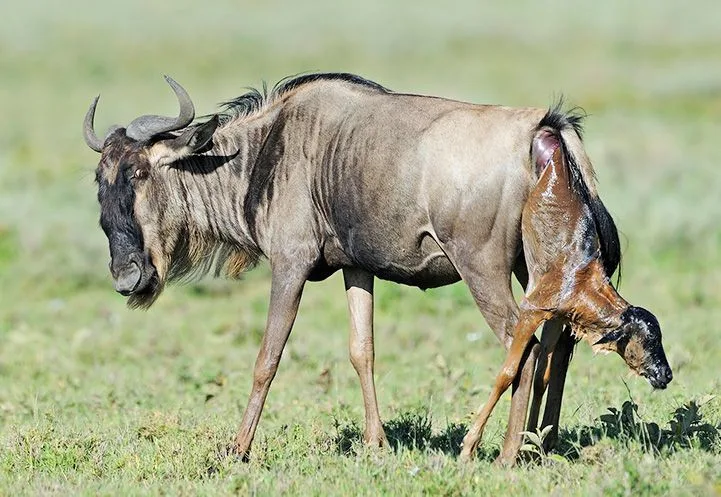
Calving season in Serengeti peaks from late January to February, the herds are usually in the southern part of Serengeti where they seek out fresh grazing during the great migration.
This period marks the time when a significant portion of the wildebeest population gives birth to their young. The exact timing can vary slightly based on environmental factors like rainfall and grass availability, which influence the movement of the herds.
During this season, approximately 8,000 young wildebeest are born every single day during the peak of the season. Furthermore, thousands of zebras, and other ungulates gather in the southern Serengeti plains to give birth. The lush, nutrient-rich grasses provide an ideal environment for the newborns, ensuring they have plenty of food for their initial growth. The timing of the calving season is strategically aligned with the rainy season, ensuring there’s an abundance of vegetation to sustain the young ones.
The calving season is a critical time for predators as well, with lions, cheetahs, hyenas, and other carnivores taking advantage of the vulnerability of the newborns. It’s a time of both celebration and danger in the circle of life in the Serengeti.
In the Circle of Life, A Mother's Tender Moment as a Wildebeest Calf Enters the World
The best experience during the Calving season in Serengeti is the Hot air balloon safari. The balloon safari across the Serengeti plains taking the most majestic view from the sky Witnessing miracle of Life and the Birth of a New Generation in the Serengeti is a lifetime adventure.